


We affirm (Insha' Allah) that:
1. Education is a lifelong process, consisting of Ta'dib (manners and discipline), Ta'lim (knowledge), and Tarbiyyah (training of character). The primary aim of an Islamic education is to produce students who are Mu'taqeen (conscious of Allah and responsible to Him for their actions). We aim to educate our children so strictly by the Qur'an and Sunnah that they become reminders to us of our duty to Allah.
2. The responsibilty for the education of the child belongs primarily to the parents; the school is created to assist in this goal. An alliance between home, school, and the student is essential for success.
3. Adab (manners and discipline ) is necessary before real learning can take place. The child must be guided to understand that discipline comes from within...from the sure knowledge that Allah sees every thought and actions. Thus, the concept of Taqwa ( God-consciousness) is taught from the very first day.
4. Our staff acknowledges and respects the great potential inherent in every child. We aim to assist the student in building character, self-esteem, and abilities, so that he will be an asset to the Ummah ( Islamic Community) , his family, and himself.
5. The relationship between the teacher and the student is of utmost importance. A child gains respect when he/she sees that the same set of rules that are being taught are also applied to elders. Children learn through observation; what is observed of the teacher's character often has greater impact on the student than the written curriculum.
6. A holistic approach to education is essential. Our staff is called upon daily to fulfill our students' intellectual, spiritual, emotional, physical, and social needs. We must consider the whole child- his/her spirit, heart, mind, body, family connections, aspirations, aptitudes, and culture upbringing.
skip to main |
skip to sidebar
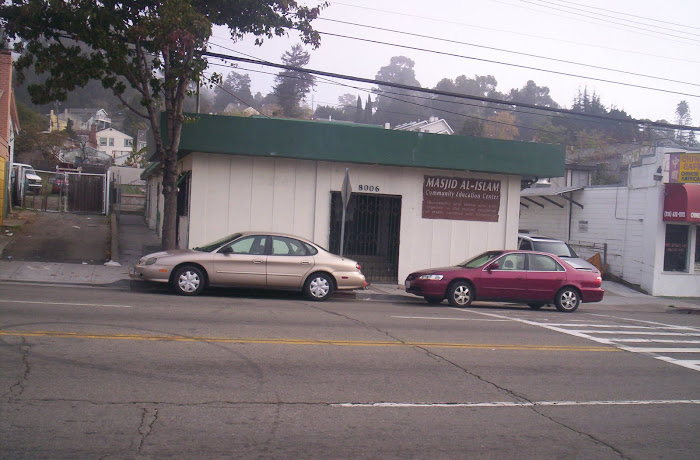
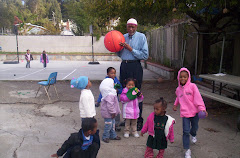


Assallamu Alaikum Wa Ruhmut Allahi Wa Barakatu..... Oh Allah, Increase us in Knowledge...... Masjid Al Islam Education Curriculum covers Preschool to 8th grade. MAIS includes Islamic Studies, Arabic, Math, Language Arts, Reading, Science, Social Studies, Arts & Crafts, Drama, and Physical Education and Health. Classes are divided according to gender when possible, and recesses are taken separately in the 4th-8th grades. We strive to maintain a high academic level from the earliest age.


No comments:
Post a Comment